All Commits, Merged
Revisting my commit history.
13 min readWork essay
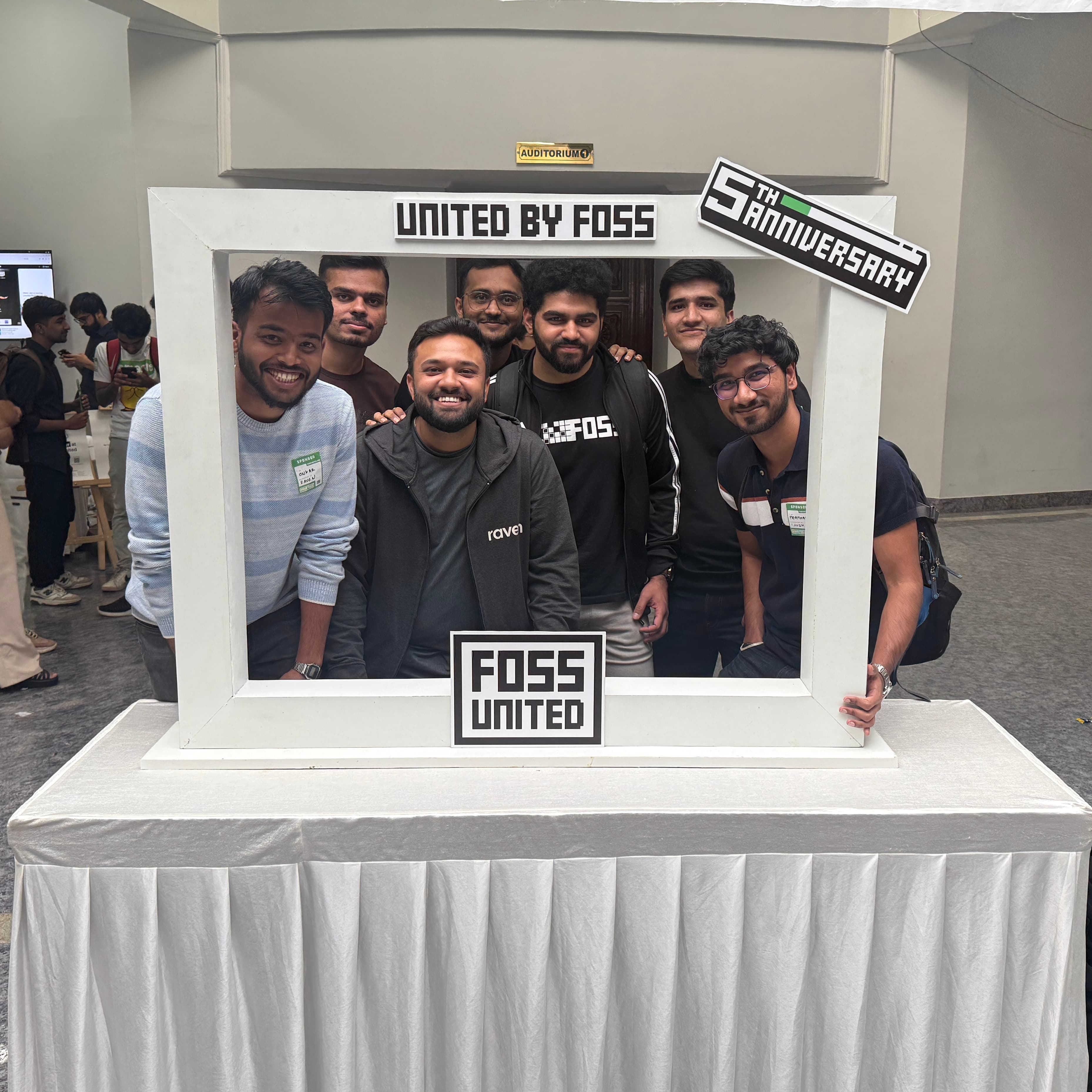
It's December 2025. I had a couple of blogs I wanted to write this month, I am still unsure on how many would I end up writing by the end of the month, but I have to get this one out.
It's rare for me that I know exactly where to start writing about this one, I have to start from December 11th 2023. If you want to skip the journey part - Just jump to What TCC Gave Me.
December 11th 2023
I woke up that morning after a nightmare. One of those that doesn't really end when you open your eyes. I was depressed, exhausted, and carrying questions I didn't have answers to. I was questioning everything - the work I was doing, the choices I had made, and whether I was wasting time pretending things would eventually fall into place.
I had been working at a big corporation for over a year and a half. On paper, it was fine. In reality, I felt stuck. I wasn't growing in the ways I wanted to. My personal goals felt distant, almost invisible. The work didn't excite me, and worse, it made me feel like I didn't belong there.
You know that feeling? When your idea of your potential self and your current reality are so far apart that it starts to hurt. When you feel lost, stuck, constantly doubting yourself. I lived with that feeling for over a year. That morning, I decided I was done trying. Done applying for jobs in India, done hoping something would magically change. I convinced myself the only way out was a Master's degree - go to the US like many of my friends, reset life from scratch.
I had breakfast, opened Google, searched for LeapScholar. Filled out the form. Scheduled a call. I had about an hour before that call. So I did what I usually did when I didn't want to think too much - I scrolled Twitter.
That's when I saw Nikhil's profile. I recognised him from college. Without overthinking it, I dropped him a DM. No expectations. Honestly, I didn't even expect a reply. Rejection had become familiar by then. I went ahead with the LeapScholar call and told them yes, I wanted to pursue a Master's degree. Because at that moment, it felt like the only way I could get out of the mess I was in. Later that evening, while I was at the gym, I got a call from Kirti asking me if I had reached out to Nikhil for a job. I was confused - how did she even know? Turns out Nikhil had called her and asked about me. She and Onkar were people I had worked with during SIH and also my closest friends, and they had put in a good word for me. I didn't realise it then, but that mattered a lot. Forever grateful of course. Nikhil scheduled a call later that night sometime around 10 or 11 PM.
An odd time for a professional call, but that stuck with me. It told me something about how he worked. About caring enough to show up when it mattered. We spoke for over an hour. I had no interview prep. No expectations. I thought it was just an introduction call. Somewhere during that conversation, I knew this was someone I wanted to work with. Someone whose values around work I deeply related to - caring about quality, caring about intent, caring about building things the right way. At the end of the call, he offered me a role. To this day, I don't fully know why he trusted me. He asked about my past work, my motivations, my goals - nothing extraordinary. But that call ended up being a turning point in my life.
Before that day, I had applied to hundreds of job listings. Rejected for not having enough experience, for skillsets not aligning, for bad interviews, for insanely difficult final rounds, sometimes even for location preferences. Countless no's. Countless small failures.
It's funny how life turns around just when you're about to give up. It makes you believe, slowly, that doing the right thing day after day eventually adds up. The things you do when nobody is watching, the kindness you give around you does add up in ways you would never believe.
Then came the harder part - convincing my parents. I was leaving a big, stable organisation for a seven-person startup with maybe six months of runway. On paper, it sounded reckless. Even I couldn't logically explain why this made sense. Till this day, it does not make any sense on paper. My dad was cautious. Understandably so. He didn't trust the decision. But I did. I trusted my instincts more than anything else. I dropped the Master's plan. I chose uncertainty.
A month later, I joined The Commit Company.(TCC)
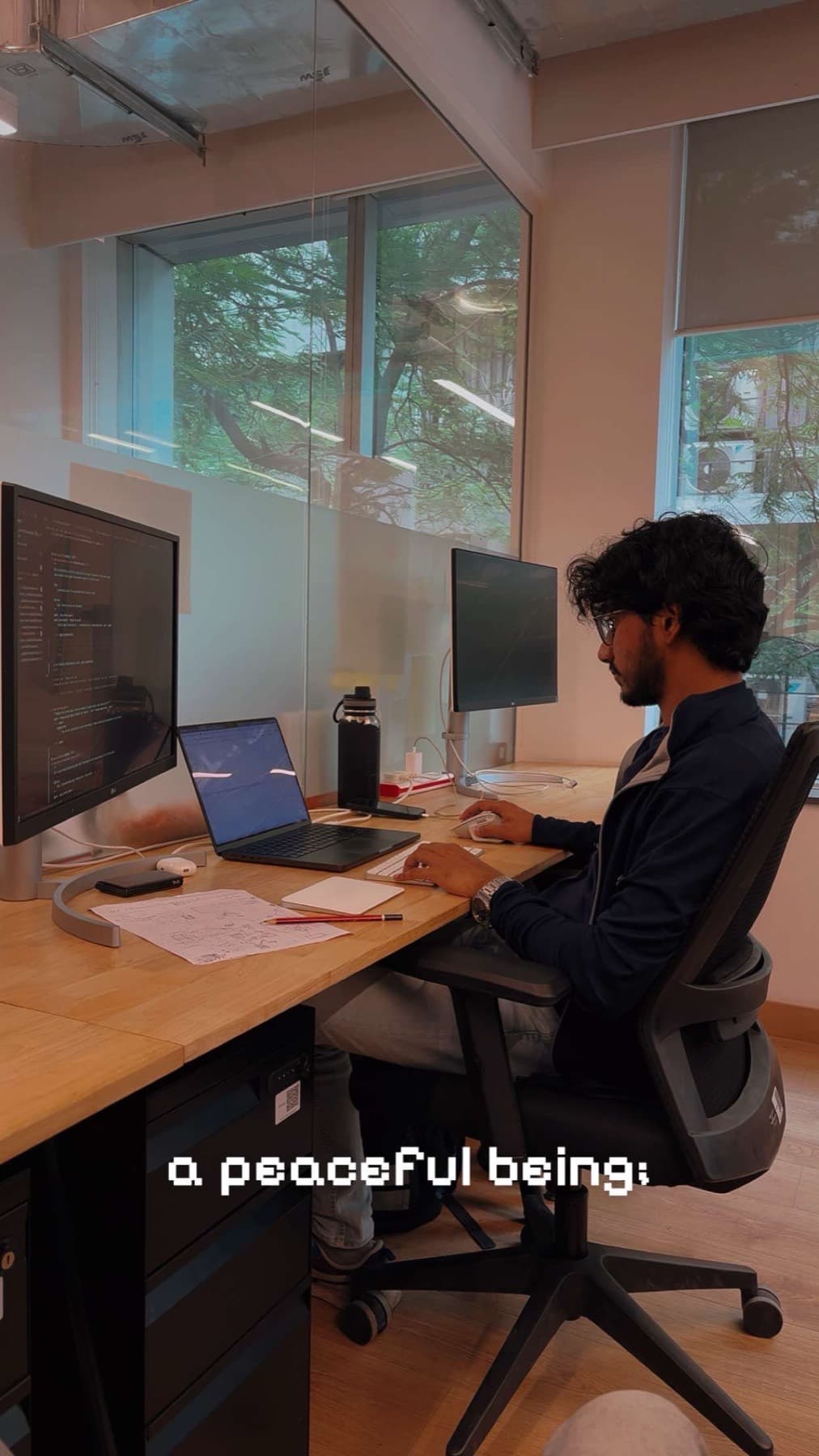
The first few weeks were mostly about showing up. Figuring out commute routes. Travelling an hour and fifteen minutes one way every day on the newly launched Pune Metro. I did that without complaints for over two years. I could've chosen comfort. I could've chosen a remote role. But I wanted to be in the office. I wanted to learn by being around people who were better than me. I stayed late on days I could've left early. I watched how people worked. I listened more than I spoke.
From day one, everyone made sure I felt comfortable, like I belonged. Aditya, especially, was incredibly accommodating even before he really knew me. A lot of my early learning didn't come from tasks or tickets, but from proximity - sitting beside people, being a silent co-pilot to Nikhil, Aditya, Janhvi, Yash, Sumit. Watching how they thought, how they debugged, how they cared about the smallest details. Slowly, I started taking on bigger tasks. Slowly, responsibility followed. And without realising it, the place I had joined as a risk started feeling like home.
What TCC Gave Me
What stood out about TCC early on wasn't the work itself, but the expectations. There was freedom, but it came with responsibility. You were trusted, but you were also expected to care. There was very little room for half-hearted work. I learned quickly that quality mattered here. That intent mattered even more. There was zero tolerance for mediocre work - not because someone would call you out, but because you didn't want to let yourself or the team down.
In a team of seven or eight people, even one person doing half-hearted work affects the collective output. That reality forces you to show up fully. We worked on both service and open-source products, and I genuinely enjoyed both. From the very beginning, I was groomed personally. I owe a large part of my skill set to the people I worked with.
Nikhil, especially, has had an immense influence on how I think - not just about engineering, but about work and life in general. When you work at a small company, your work has weight. The changes you make directly affect people. There's no abstraction layer between you and the outcome. That automatically instills ownership. You stop thinking in terms of “tasks” and start thinking in terms of responsibility. That's something I'll carry with me wherever I go. Working on open-source products and seeing real users use something you built changes you. Bugs aren't theoretical. Feedback isn't abstract. You can't hide behind process or hierarchy. You have to show up and own your work. Failures aren't escalations, they're part of the process. You learn, fix things, and move on. That mindset did more for my growth than any formal training ever could.
Over time, I started thinking more from first principles in whatever I did. This wasn't accidental - it was baked into the culture(thanks to Nikhil). Skills can be built over time. You can learn frameworks, languages, systems. But what really matters, no matter what field you belong in is something else entirely.
- High ownership.
- High agency.
- First-principles thinking.
- Patience.
- Focusing on fundamentals.
- Caring about the why.
- Doing high-quality work.
- Doing the boring work.
- Doing the hard shit.
- Being ambitious without being careless.
These aren't things you pick up from tutorials. These are things you absorb by being in the right environment.
Design is another thing I started valuing deeply after joining TCC. Janhvi and Nikhil were both extremely particular about building high-quality looking products. When you're constantly surrounded by good design - when your reference points are products like Linear, Figma, Cal.com - your standards change. You start noticing details. You start caring. You try to learn from the best and bring that thinking into your own work.
Somewhere along the way, I also learned how small startups actually operate. That mattered to me more than I realised at the time. I've always had goals like having my own startup at some point or being part of an elite startup and taking it through in a journey, and this gave me a front-row seat to how things are built from scratch - thinking in small units, keeping scope tight, but still holding a big-picture vision. That learning is invaluable. Over time, my relationship with work changed.
I stopped focusing only on outcomes and started focusing on doing honest work, consistently - even when it wasn't visible or glamorous. Not just for money, but because I genuinely enjoy what I do. That's when work starts becoming fun. Money is obviously important in a capitalistic world, but if your entire relationship with your career is transactional, it drains you.
Real satisfaction comes from knowing you showed up and tried to give your best - day after day - even when no one was watching. TCC also gave me something less tangible, but equally important - exposure. A network. I spoke at conferences. I interacted with the community. I met people who were far better than me. And instead of feeling insecure, I felt curious. Walking into rooms full of people who know more than you is humbling in the best way. It reminds you how much there is left to learn.
The Ending That Makes This Blog Exist
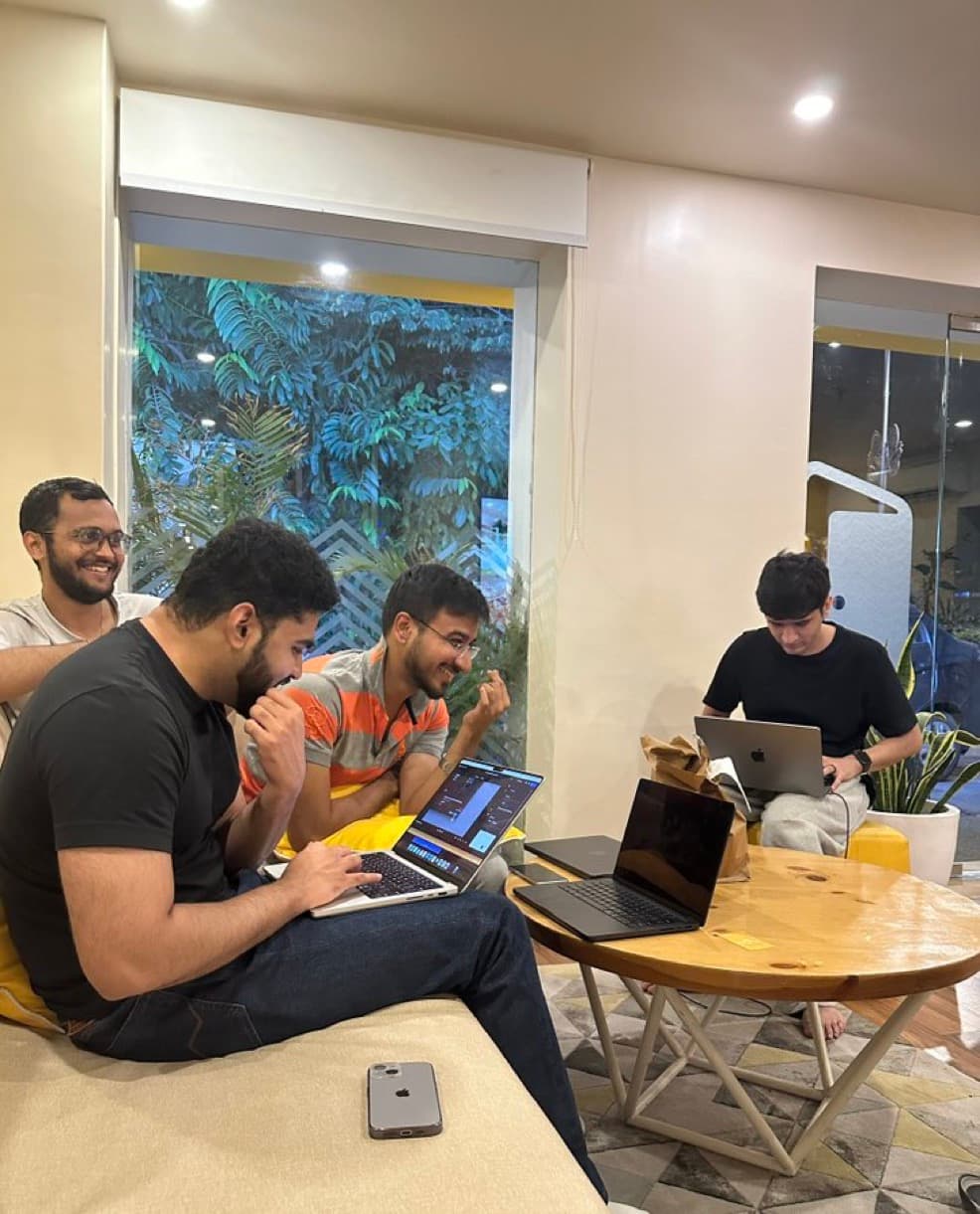
Maybe that's why the decision that came later was so difficult. In September, I wrote about that month being heavy. About big decisions quietly sitting in the background while life kept moving forward. I didn't name them explicitly back then, but one of those decisions was whether to join Frappe-and by extension, what it would mean for The Commit Company to no longer exist in the way it always had. It wasn't an easy choice. Not emotionally, at least.
On the surface, acquisitions are framed as success stories. Growth. Scale. The “next logical step.” But when you're inside a small team-when your identity is deeply tied to the work, the people, the culture-it feels less like progression and more like letting go. For me, choosing to go through with the acquisition was a deeply personal decision. Nikhil had explained to us what the acquisition or acquihire meant, how it is going to affect us, what's going to change and what's not.
I gave it some thought. And once again, I found myself listening to the same instinct that has guided most of my important decisions so far.
I had reached a point where I knew I needed a larger playground. Not because TCC was limiting me, but because it had prepared me well. The kind of work I wanted to do next required different scale, different problems, and different levels of exposure. I wanted to learn different aspects at a slightly larger startup, how things operate at that level.
Staying where I was would've been comfortable-but comfort has never really been my thing. There is nothing wrong with choosing comfort as well, but something about that just does not sit right with me, it's just how I have been. I have chosen risk over comfort on most days. I chose risk when I left a big corporation and a Masters route to join a seven-person startup. I wouldn't be here making this decision today if I had chosen comfort back then. Choosing the acquisition felt like a continuation of that same pattern - moving forward before stagnation sets in.
Joining Frappe made sense for where I am right now. It aligns with my long-term curiosity around startups, building products that last, and learning how systems operate at a much larger scale. It felt like the right environment to keep growing without discarding everything I had learned so far. The culture felt familiar - people who care deeply about their work, who value fundamentals, who take pride in what they ship. Being in the right environment has always brought the best out of me, and this felt like another such environment.
From the company's perspective, the decision made sense too. TCC had always been about doing great work with the right intent, taking larger bets, and making world class products out of India. The acquisition wasn't about cashing out or chasing optics. It was about ensuring continuity. About giving the products a stronger foundation, better distribution, and a future that didn't depend on a handful of people pushing themselves endlessly.
The products we built deserve to reach more people. They deserve sustained effort, every single day. And getting to work on your own product, your own vision, five days a week - six, if you genuinely want to - is a privilege. This felt like protecting what we had built, not abandoning it.
Still, knowing something makes sense doesn't make it easy. There's grief in watching a chapter end-especially one that shaped you so deeply. A part of me will always associate my growth, my confidence, and my relationship with work with TCC. That doesn't disappear overnight. It won't.
But there's also a quiet reassurance in knowing this chapter did what it was supposed to do. It took me from uncertainty to clarity. From self-doubt to ownership. From wanting to escape to wanting to build. It made me who I am today.
As I step into Frappe, I'm not carrying expectations. I'm carrying lessons. I'm not trying to recreate what TCC was. I'm grateful it existed exactly the way it did, for exactly the time it did.
I am scared. And I am excited. Starting again from scratch is never easy - even if I've done it before. I hope I grow here. I hope I do my best work here. That's honestly all I'm trying to do.
Some chapters don't end because they failed.They end because they succeeded. This one did - for me, for the people who built it, and for everyone who supported us along the way. I gained friends here. I found a deeper sense of purpose. And for that, I'll always be grateful.
Thank you to everyone who made this place what it was -
Janhvi Patil, Sumit Jain, Aditya Patil, Yash Jane, Pranav Mene, Aditya Lolge and most importantly, Nikhil Kothari. I genuinely hope we all keep doing meaningful work, wherever we go next.
And now, just like I say in my bio - keep moving forward. I plan to do exactly that. This chapter is complete.
All commits have been merged into Frappe.